

Blocked Toilet Again? When the Problem Is Deeper Than the Toilet Itself
A toilet that will not flush properly seems like a very local problem. The bowl is right in front of you, so it is easy to assume the blockage must be sitting inside the toilet trap. Sometimes it is. Other times, repeated trouble at the toilet is only the first visible sign of a restriction further along the drainage system.
That difference matters when deciding what kind of blocked toilet repair is actually needed. A simple obstruction close to the bowl may respond to straightforward clearing. A toilet that blocks again, affects nearby fixtures or causes water to rise elsewhere may be pointing to a branch drain or main sewer problem that cannot be solved from the toilet alone.
Start with what the water is doing
The behaviour of the bowl gives useful clues. If the water rises immediately after flushing and then slowly falls, there may be a partial restriction that still allows some flow. If the bowl remains high, the blockage may be more complete. If the level is unusually low or changes when another fixture is used, air movement and a deeper drainage restriction may be involved.
Pay attention to what happens outside the toilet as well. A shower waste that bubbles when the toilet is flushed, a nearby basin that gurgles, or water appearing in a floor drain suggests the problem may sit after those fixtures join a shared line.
The toilet can be the first place you notice the fault simply because it sends a larger volume of water and waste into the drain at once.
Not every blockage is caused by too much toilet paper
Toilet paper and foreign objects are common causes, but they are not the only ones. Wipes, sanitary products, children's toys and other items can become lodged in the trap or branch line. Further downstream, roots can enter cracked or separated pipe joints and create a mesh that catches normal waste.
Older pipework can also develop rough internal surfaces, displaced joints or sections that hold water. In those cases, ordinary toilet use may repeatedly trigger a blockage even though the household is not flushing anything unusual.
This is why blaming the most recent flush can be misleading. The paper visible during a blockage may simply be the material that finally caught on an existing defect.
The difference between a toilet fault and a drain fault
A toilet has its own internal trap and connection. A problem limited to that section may affect only one toilet. The rest of the bathroom can continue draining normally.
A deeper restriction behaves differently. Several fixtures may become slow, noises may travel between them, or the lowest drain in the house may start to rise when water is used elsewhere. In a two-storey home, an upstairs toilet may appear normal while a lower shower or floor waste shows the backup first.
Outside, an overflow relief gully can also provide a clue. It is designed to give wastewater a lower external escape point if the sewer line blocks, helping reduce the chance of sewage emerging inside the home. If it is overflowing during normal water use, that is not simply an outdoor mess. It can indicate a downstream blockage that needs attention.
Why plunging can work and still not solve the problem
A plunger can move a soft obstruction or open a temporary path through a partial blockage. If the issue is close to the bowl, that may be enough. The difficulty is that a successful flush afterwards does not prove the rest of the line is clear.
If roots, wipes or compacted material remain further down, the toilet may work for a day or a week before symptoms return. Repeated force can also push an object deeper into the drainage system, making the next blockage harder to reach.
Chemical drain cleaners are generally a poor choice for toilets. They may remain trapped in standing water, create a handling risk for the person who later dismantles the toilet or uses clearing equipment, and they do not correct structural pipe faults.
What a plumber checks during blocked toilet repair
A plumber will usually begin by establishing whether the problem is confined to the toilet. They may ask whether other fixtures are slow, whether the issue has happened before, what has been flushed and whether there are outdoor signs such as a gully overflow.
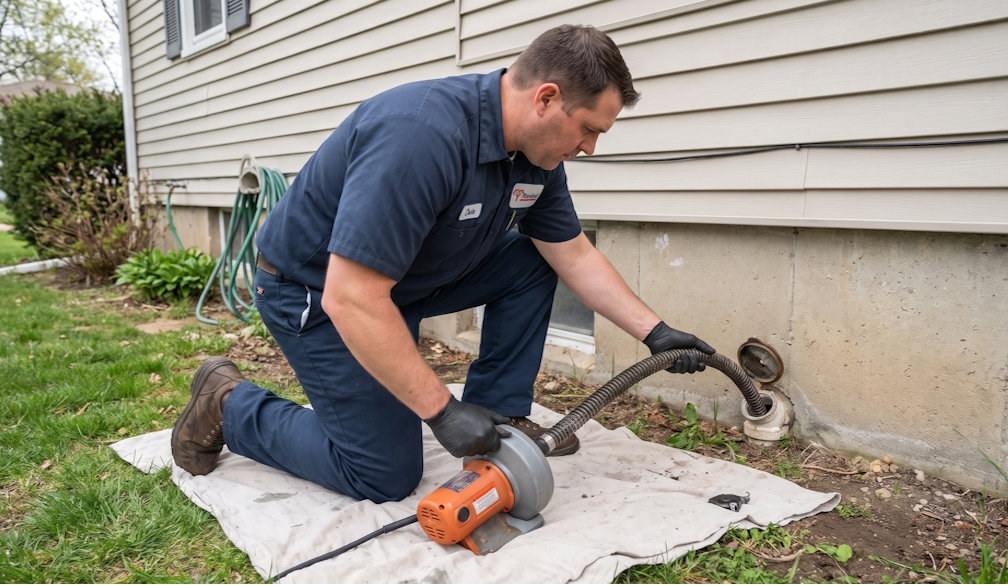
If the obstruction appears local, the toilet or short branch can be cleared using appropriate equipment. If symptoms suggest a deeper issue, the plumber may access the drainage line elsewhere and clear the restriction from a more suitable point.
For recurring problems, inspection becomes important. A camera can reveal roots, cracked pipework, displaced joints, foreign objects or a section of pipe holding water. That evidence helps separate a one-off blockage from a defect that is likely to cause repeated failures.
What to do while you are waiting for help
If the bowl is rising, do not keep flushing to see whether it will clear. Turn off the toilet's isolation tap if needed and stop using nearby fixtures if they cause the water level to rise further. Keep children and pets away from any wastewater overflow.
Check whether another toilet in the property is working normally, but avoid running large volumes of water through the system as a test. A washing machine or bath can release enough water to make a partial blockage overflow at the lowest fixture.
It is useful to tell the plumber whether the toilet is the only affected fixture, when the problem began, whether it has happened before and whether any unusual item may have entered the drain. That information can save time during diagnosis.
Repeated toilet blockages deserve a different question
A toilet that blocks once may simply have encountered too much paper or a foreign object. A toilet that blocks again after proper clearing deserves a broader look.
Ask whether the restriction was actually in the toilet, further along the branch, or in the main drain. If roots or pipe defects are found, the lasting solution may involve repair rather than repeated clearing. If the pipe is sound, changing what enters the toilet may be enough to prevent another problem.
The goal of blocked toilet repair is not just to make the bowl flush at the end of the visit. It is to work out why the toilet stopped carrying waste properly in the first place. When the fault sits beyond the fixture, treating the whole drainage path is what turns a recurring toilet problem into a resolved plumbing issue.