

Why are construction surveyors crucial for project success?
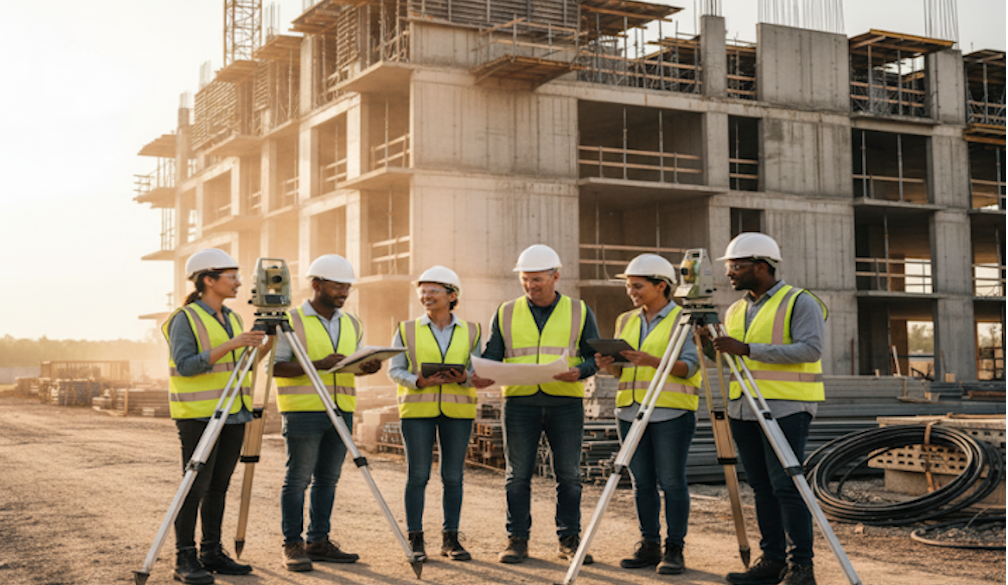
Embarking on any construction venture, whether it is a towering high-rise or a sprawling residential estate, involves a complex interplay of design, engineering, and meticulous execution. The success of these ambitious projects hinges on a foundational element often overlooked by the casual observer: precision. Without accurate measurements and expert spatial data management, even the most brilliant architectural plans can falter, leading to costly delays, rework, and potential safety hazards.
This is precisely where the expertise of professional construction surveyors becomes not just beneficial, but absolutely crucial. They are the unsung heroes who translate intricate blueprints into tangible reality on the ground. From the initial site assessment to the final handover, their role ensures every element aligns perfectly, adhering to design specifications and regulatory standards. Understanding their multifaceted contributions reveals why no significant project can truly thrive without their dedicated involvement.
The foundational role of precise measurements
Every successful construction project begins with a clear understanding of the physical environment. Construction surveyors are instrumental in providing this clarity through highly accurate measurements and detailed site analysis. Their work establishes the spatial framework upon which all subsequent building activities depend, setting the stage for smooth operations.
Imagine trying to build a complex structure without knowing the exact dimensions or contours of your land; it would be like attempting to assemble flat-pack furniture without the instructions. Surveyors prevent such chaos by delivering the precise data needed to proceed confidently. Their expertise is the bedrock of any well-executed project.
Setting the initial groundwork
Before the first shovel breaks ground, construction surveyors meticulously map out the site. They identify property boundaries, existing infrastructure, and any topographical features that might influence the build. This initial groundwork is vital for design validation and for ensuring that proposed structures fit within the allocated space without encroaching on neighbouring properties or easements.
Their detailed surveys reveal hidden challenges or opportunities, such as variations in elevation or the presence of underground utilities. This early insight allows project managers and engineers to make informed decisions. It helps to prevent unforeseen complications once construction is underway, saving both time and considerable expense down the track.
Ensuring structural integrity
As construction progresses, surveyors remain on site, providing essential set-out services. They mark the exact locations for foundations, columns, walls, and services, ensuring that every component is placed precisely according to the engineering drawings. This involves establishing control points and constantly monitoring verticality and alignment throughout the build process.
The accuracy provided by these professionals is paramount for the structural integrity of the finished building. Even minor deviations can compromise stability, leading to significant structural issues or, in worst-case scenarios, catastrophic failure. Their continuous oversight guarantees that the structure rises true and strong, conforming to stringent safety standards.
Navigating complex regulations and compliance
Construction projects operate within a strict framework of legal and regulatory requirements. From local council planning schemes to national building codes, adherence to these rules is non-negotiable. Construction surveyors play a critical role in ensuring that every aspect of a project complies with these often-complex guidelines, safeguarding against legal disputes and costly penalties.
Their deep understanding of spatial regulations helps to interpret and implement these rules on the ground. This expertise is invaluable for developers and builders, providing peace of mind that their projects will meet all necessary approvals. It streamlines the permitting process and avoids potential rejections that could derail timelines.
Adhering to local council requirements
Every local council has specific bylaws regarding setbacks, maximum building heights, site coverage, and easement restrictions. Surveyors accurately delineate these zones on site, ensuring that all proposed structures and earthworks remain within permissible limits. They also prepare detailed plans and reports required for development applications, providing clear evidence of compliance.
Their work in defining these boundaries prevents accidental breaches of planning regulations, which can result in hefty fines or even demolition orders. By meticulously verifying compliance, surveyors help projects sail through approvals. This avoids the headaches and financial burdens associated with non-conformance. It's about building smarter, not harder.
Mitigating environmental impacts
Modern construction also places a significant emphasis on environmental responsibility. Surveyors contribute by providing accurate data on site topography, hydrology, and existing natural features. This information is crucial for designing effective drainage solutions, preserving sensitive ecosystems, and ensuring minimal environmental disruption during construction activities.
They help identify areas requiring protection or specific management strategies, such as tree preservation zones or erosion control measures. By integrating environmental considerations into the surveying process, they assist projects in meeting sustainability targets and regulatory requirements. This fosters a more harmonious relationship between development and the natural surroundings.
Maximising efficiency and cost-effectiveness
Time is money in construction, and efficiency is the key to profitability. Construction surveyors contribute significantly to both by streamlining operations and preventing expensive errors. Their precise data and ongoing monitoring help keep projects on schedule and within budget, which is a critical factor for any developer or builder.
By providing accurate information at every stage, they minimise waste and optimise the use of resources. This forward-thinking approach transforms potential problems into manageable tasks. It ensures that projects progress smoothly without unexpected financial setbacks or frustrating delays that can plague less organised ventures.
Preventing costly errors and delays
One of the most valuable contributions of construction surveyors is their ability to prevent errors before they escalate. By verifying dimensions, alignments, and levels throughout the build, they can identify discrepancies early. Catching these issues promptly saves immense costs associated with dismantling and rebuilding incorrect work, often referred to as rework.
Accurate surveying also ensures that materials are ordered correctly, reducing waste and avoiding delays caused by insufficient or incorrect supplies. Imagine ordering thousands of cubic metres of concrete only to find your forms are off by a significant margin; the financial implications are staggering. Surveyors help avoid these expensive miscalculations.
Optimising resource allocation
Surveyors provide critical data for earthworks, enabling precise cut-and-fill calculations. This is fundamental for balancing the movement of soil on a construction site, minimising the need to import or export material. By accurately determining elevations and volumes, surveyors help project managers optimise grading plans, significantly reducing costs associated with trucking, material procurement, and disposal. Their input ensures that excavations for foundations, trenches for utilities, and site levelling are executed to the exact specifications, preventing costly over-excavation or the need for additional infill. This precision extends to the placement of temporary structures, access roads, and material laydown areas, ensuring efficient site logistics and workflow. Without this detailed data, projects risk substantial cost overruns due to inefficient material handling and unnecessary earth movement.
Enhancing Site Safety and Structural Integrity
Beyond financial savings, construction surveyors are instrumental in ensuring the safety of workers and the long-term integrity of the structures they help build. By precisely marking out hazard zones, establishing clear access and egress routes, and verifying the correct placement of safety barriers and scaffolding, they contribute to a safer work environment. Their constant monitoring of benchmarks and control points throughout the construction process helps detect any ground movement or structural shifts that could compromise stability. This early detection allows engineers and contractors to take corrective action before minor issues escalate into dangerous failures.
Moreover, surveyors play a vital role in verifying that structural elements, such as columns, beams, and pre-cast panels, are installed exactly as designed. Deviations in alignment or level can introduce undue stress on a structure, potentially leading to catastrophic failure down the line. Through meticulous checks and balances, surveyors provide the assurance that the built environment adheres to stringent safety standards, protecting both the people involved in construction and the future occupants of the completed facility.
Leveraging Advanced Technology for Unparalleled Accuracy
The field of construction surveying has been revolutionised by technological advancements, enabling even greater precision and efficiency. Modern surveyors utilise sophisticated tools such as GPS/GNSS systems, robotic total stations, 3D laser scanners, and unmanned aerial vehicles (UAVs or drones). These technologies allow for rapid data collection over large areas, producing highly accurate three-dimensional models of sites and structures. This digital data can be seamlessly integrated with Building Information Modelling (BIM) platforms, creating a comprehensive digital twin of the project.
Laser scanning, for instance, captures millions of data points in minutes, providing an incredibly detailed "point cloud" that can be used for clash detection, progress monitoring, and as-built documentation. Drones equipped with photogrammetry or LiDAR sensors can quickly survey vast landscapes, providing up-to-date topographical maps and volumetric analyses. This integration of technology not only enhances accuracy but also significantly reduces the time spent on manual measurements, allowing surveyors to focus on data analysis and problem-solving. It ensures that designs are translated into reality with unprecedented fidelity, minimising human error and accelerating project timelines.
Frequently Asked Questions
What is the primary role of a construction surveyor in a project?
Construction surveyors are crucial for translating architectural blueprints into tangible reality. Their primary role involves providing highly accurate measurements and detailed spatial data from initial site assessment to final handover. This ensures every element aligns perfectly with design specifications, regulatory standards, and contributes to structural integrity and project success.
How do construction surveyors contribute to cost-effectiveness and efficiency?
Surveyors maximise efficiency and cost-effectiveness by preventing costly errors and optimising resource allocation. They identify discrepancies early, reducing rework, ensuring correct material orders, and enabling precise cut-and-fill calculations for earthworks. Their accurate data keeps projects on schedule and within budget, minimising waste and unexpected financial setbacks.
What advanced technologies do modern construction surveyors utilise?
Modern construction surveyors leverage sophisticated technologies such as GPS/GNSS systems, robotic total stations, 3D laser scanners, and unmanned aerial vehicles (UAVs/drones). These tools enable rapid, highly accurate data collection, producing detailed 3D models and point clouds that integrate with BIM platforms, enhancing precision, efficiency, and problem-solving.
In conclusion, the role of construction surveyors extends far beyond simply marking points on a map. They are indispensable guardians of precision, efficiency, and safety across every phase of a building project. From the initial site analysis and earthworks optimisation to preventing costly errors, enhancing structural integrity, and leveraging cutting-edge technology, their contributions are foundational to successful project delivery. By providing the accurate, reliable data that underpins all construction decisions, surveyors ensure that ambitious visions are transformed into resilient, functional, and economically viable realities. Their expertise is not just an asset; it is a critical investment that safeguards a project's budget, timeline, and ultimate quality, making them truly invaluable members of any construction team.
