

How Blocked Drains and Cockroach Problems in Sydney Homes Tend to Happen Together
- Written by: Auzzi Shopping
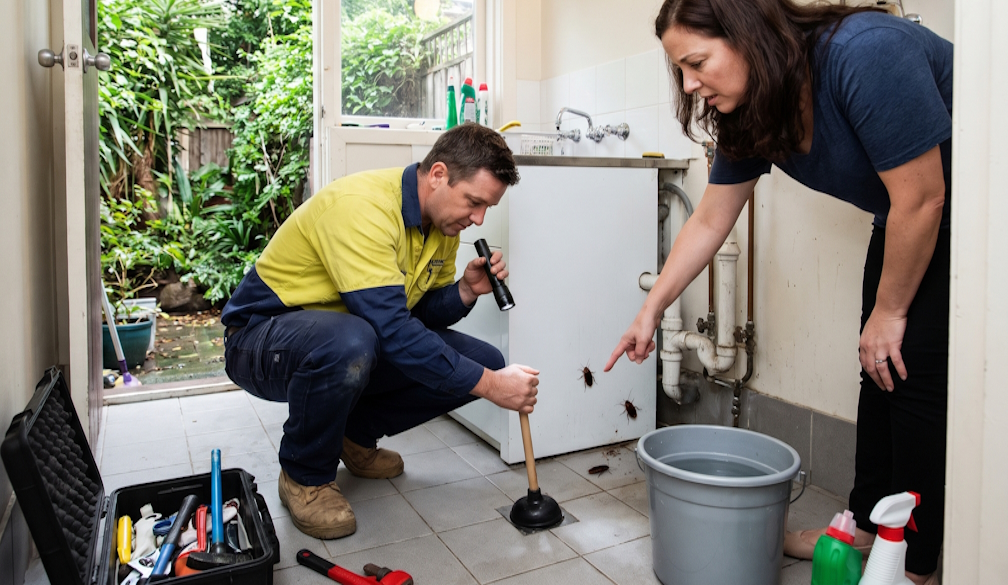
There is a pattern that pest technicians and plumbers working in older Sydney suburbs see repeatedly. A homeowner calls about cockroaches. The infestation is active, the treatment works initially, but within a few months the problem returns. When the history of the property is explored, there is almost always an underlying drainage issue: a slow drain, a cracked pipe, a blocked stormwater connection, or a sewer line that is not running freely.
The connection between drainage problems and cockroach activity is not coincidental. It is structural. And understanding it explains why cockroaches coming through drains is one of the most consistent pest presentations in Sydney's older housing stock.
How Drain Systems Create Ideal Cockroach Conditions
Drains are not sealed systems in the way most homeowners imagine. Stormwater pipes, sewer lines, and sub-floor drainage all have access points: inspection openings, cracked joints, tree root intrusions, and gaps at fixture connections that provide direct pathways from the underground drainage network into the spaces beneath and inside a property.
The drainage network itself is a near-perfect cockroach environment. It is warm, consistently moist, sheltered from light, and rich in organic matter. Cockroaches that establish themselves in a sewer or stormwater system have access to food and moisture year-round, which means they do not need to forage as far or as frequently as populations in other environments.
When a drain runs slowly or has a partial blockage, the conditions improve further. Organic material accumulates upstream of the blockage and provides additional food. The water level in the pipe fluctuates less, maintaining higher humidity. And the blockage itself often creates gaps at joints that were previously held under compression, opening new pathways into the subfloor or wall cavities of the property above.
The Species Most Commonly Found in Drain-Related Infestations
The Australian cockroach and the American cockroach (sometimes called the sewer cockroach) are the species most frequently associated with drain activity in Sydney homes. Both are significantly larger than the German cockroach that is most common in kitchens and food businesses. They are found in subfloors, roof voids, and garden areas, and they use drain access points to move between the underground network and the interior of properties.
Unlike German cockroaches, which establish harborage indoors and tend to stay there, these larger species move between outdoor and indoor environments regularly. This is why a treatment that resolves a German cockroach infestation in a kitchen may not work the same way on an Australian or American cockroach problem; the source is external, and the pathway back in remains open until the drainage issue is addressed.
Why Treating the Pest Without Fixing the Drain Does Not Work
A spray treatment that kills the cockroaches present at the time of application provides temporary relief, but it does not close the pathway from the drain network into the property. Cockroaches from the broader population in the drainage system will recolonise the same access points within weeks.
This is the most common reason cockroach treatments in older Sydney homes appear to fail. The treatment worked, but the source was never addressed. Pest technicians who are experienced with drain-related infestations will identify the likely access points during an inspection and recommend that any drainage issues be assessed by a plumber before or alongside the pest treatment.
The combination of a CCTV drain inspection to locate the access points, followed by a professional pest treatment targeting the identified harborage zones, is what resolves the problem rather than managing it indefinitely.
What to Look for in an Older Sydney Property
Properties most at risk of drain-related cockroach activity share a few common characteristics. They tend to have original clay or cast-iron sewer lines, which crack and develop root intrusions more readily than modern PVC pipes. They often have subfloor spaces that are accessible from the garden, either through vents that are not screened or through gaps in the perimeter. And they tend to have plumbing fixtures that have been updated over decades, leaving gaps at connections that were never properly sealed.
Inner-ring suburbs, including Newtown, Marrickville, Leichhardt, Glebe, and Redfern, have a high concentration of properties that fit this profile. A cockroach problem in these areas that returns after treatment is almost always worth having a drain assessment alongside the pest treatment.
If you are dealing with a recurring cockroach problem in a Sydney home and standard treatments have not produced a lasting result, the drain system is the most likely explanation. Pest Power Sydney works across Sydney on cockroach infestations and can advise on whether a drainage assessment is the missing piece in resolving a persistent problem.
Frequently Asked Questions
How do I know if cockroaches in my home are coming from the drains?
The species is the first indicator. Australian and American cockroaches are much larger than the German cockroach and are the species most commonly associated with drain and sewer environments. If the cockroaches you are seeing are large, reddish-brown, and appearing in the bathroom, laundry, or kitchen near drain openings, the drainage system is a likely source. A pest technician can confirm this during an inspection.
Can cockroaches come up through toilet or sink drains?
Yes. The P-traps under sinks and the water seal in toilets provide some barrier, but cockroaches can move past them, particularly in older plumbing where seals are not maintained or where drain covers are missing or damaged. Cockroaches can also enter through floor waste drains that are not covered, overflow relief gullies in the garden, and laundry drain connections.
Will pouring bleach or boiling water down the drain fix the problem?
These approaches may deter cockroaches temporarily but do not address a population living within the drain system itself. The drainage network extends well beyond the accessible pipe openings inside the property, and any deterrent applied at the drain opening will not reach the areas where cockroaches are actually harbouring. A proper fix requires identifying and treating the harborage areas and addressing any structural issues in the drain system.
Do I need a plumber as well as a pest technician?
In many drain-related cockroach situations, yes. A pest technician can identify likely entry points and treat the harborage areas, but if the underlying cause is a cracked pipe, a root intrusion, or a blocked stormwater connection, a plumber needs to assess and repair the drainage fault. Addressing both the pest and the structural issue is what produces a lasting result.
How long does it take to resolve a drain-related cockroach infestation?
It depends on the extent of the drain issue and how established the infestation is. Where the drain problem is identified and repaired promptly alongside pest treatment, the problem typically resolves within one to two treatment cycles. Where the drain issue is complex or the infestation is well established, the process may take longer and require follow-up visits to confirm the population has been eliminated.