

Loose Gemstones in Melbourne: How to Choose a Stone for Custom Jewellery
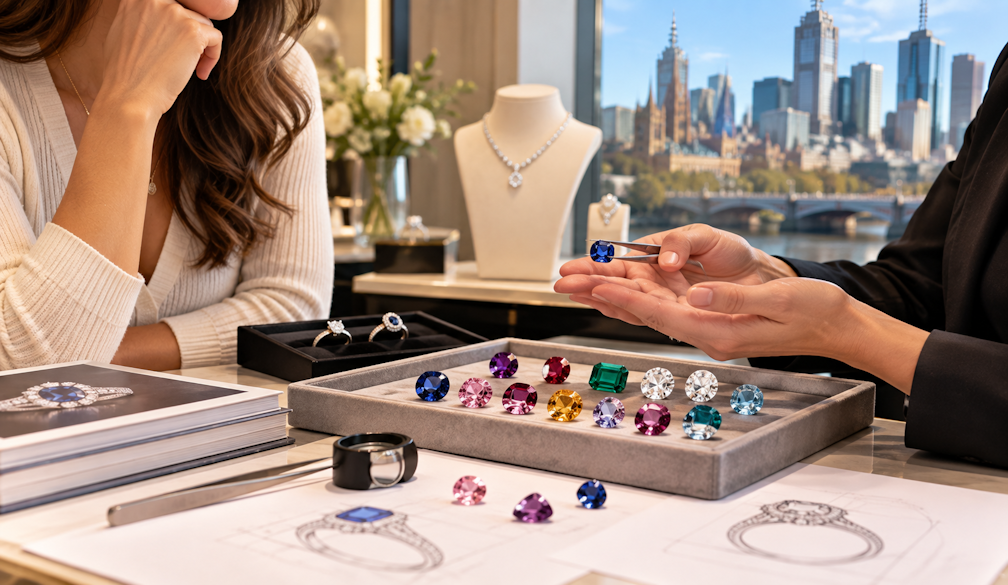
A custom piece of jewellery often begins with an image in your mind: a sapphire ring in a particular shade of blue, a pendant made around a meaningful birthstone, or a gemstone you simply cannot stop looking at.
Choosing the loose stone first lets the design grow around something real. You can see its exact colour and shape, then work with a jeweller to decide how best to frame it. But a loose blue gemstone needs to be chosen with the finished piece in mind. A stone that looks beautiful in a tray still has to suit the jewellery you plan to wear.
Here is how to approach the search in Melbourne.
Start with the piece you want to make
Before browsing gemstones, think about where the stone will go. A ring worn most days has different practical demands from a pendant worn occasionally. Earrings need stones that work together visually and are comfortable to wear. A single statement gem can be wonderful in a pendant but may sit higher than you want in an everyday ring.
You do not need a finished design yet. A few preferences are enough to guide your search:
- Will this be a ring, pendant, earrings or another piece?
- Will it be worn daily or for special occasions?
- Do you prefer a delicate look or a prominent centre stone?
- Is a particular colour, shape or origin important to you?
- What is your budget for both the gemstone and the finished jewellery?
That last question matters. If you spend your full budget on the loose stone, there may be too little left for the setting you hoped to create.
Choose a gemstone that suits how it will be worn
Colour may lead the decision, but durability matters when choosing jewellery for frequent wear. Gemstone durability involves more than scratch resistance; toughness, stability, inclusions and treatments can also affect how a stone should be set, cleaned and repaired. GIA advises considering these properties during jewellery design and setting.
Sapphire is a popular choice for rings because it is a durable gemstone, but no stone or setting is indestructible. If you are considering another gem for an everyday ring, ask a qualified jeweller how it will handle your routine and whether a more protective setting would help.
For a pendant or occasional-wear piece, you may have more freedom to choose a gemstone whose appearance you love but which needs gentler handling.
Look at colour in ordinary light
A loose gemstone has a particular advantage: you can view it from every direction before metal surrounds it. If you are visiting a Melbourne seller, ask to see the stone away from intense display lighting as well as under it. If you are buying online, request a short video of the actual stone turning in indirect daylight and indoor light.
Does its colour remain appealing? Do some areas become very dark? Can you see patches where the colour is lighter? These details are easier to understand when the gemstone moves than in one still photograph.
It also helps to see the stone beside the metal colours you are considering. Yellow, white and rose-toned metals can create different visual impressions. There is no universal best pairing; choose the combination that feels right for your piece.
Compare measurements as well as carat weight
Carat tells you the gemstone’s weight, while millimetre measurements help you picture its outline. Ask for its length, width and depth. Two stones of the same carat weight may look different in size when viewed from above because their shapes and proportions differ.
This becomes especially important in custom jewellery. A deep gemstone may require a taller setting. An unusually shaped cushion or oval may need a setting made specifically for its outline. Send the measurements to your jeweller early, but have them inspect the physical stone before the design is finalised.
If you are comparing gems on a screen, draw their length and width on paper at actual size. It is a simple way to discover whether the “large” stone in a close-up image is actually the size you imagined.
Check what you are buying
Ask for a clear description of the gemstone: its identity, whether it is natural or laboratory-grown, any known treatment, weight, measurements and the documentation included. Do not assume that a familiar trade name tells you all of this.
For a significant purchase, an independent gemological report can provide useful evidence. GIA explains that its coloured stone identification reports describe a gem’s characteristics, identify whether it is natural or laboratory-grown, and state detectable treatments. A geographic origin opinion, when available, is a separate part of certain reports.
Check that the report number and listed details match the stone for sale. Then assess its beauty for yourself: a report can describe a gemstone, but it cannot decide whether you will love its colour in your finished ring or pendant.
Invite the jeweller into the decision early
If one business is supplying the loose stone and another will make the jewellery, speak with the jeweller before you commit to the gemstone. Show them its measurements, photographs and report, and explain what you hope to create.
Ask whether the design is practical for that stone. Can it sit at the height you want? Will the proposed setting hold it securely? Are there inclusions or surface features the jeweller needs to examine? How will the design protect any exposed edges or corners?
A skilled jeweller may suggest a small change that improves both appearance and wearability. That conversation is much easier before a deposit has been paid for a design that does not quite suit the stone.
Understand the steps after purchase
A loose gemstone and a custom jewellery project are often two decisions with different terms. Before buying, check the seller’s return period and the condition required for a change-of-mind return. Ask what happens once the gemstone has been set, altered or handed to another jeweller.
Also establish who is responsible for the stone while it is being set. If you will take it to a separate jeweller, ask about their experience, handling process and insurance arrangements. Keep your receipt and gemstone documentation together.
At Ceylon Crown, we focus on loose sapphires and offer guidance for buyers considering bespoke jewellery. Our Melbourne location in Burwood is by appointment, and you can ask for more images or video of an individual gemstone before deciding. Selected stones include laboratory documentation, so check the details of the particular sapphire you are considering.
Our published policy allows eligible loose gemstones delivered within Australia to be requested for return within 14 days of receipt, subject to its conditions. Setting or altering a stone affects change-of-mind eligibility, while bespoke jewellery has separate terms. Review those details before moving from stone selection to production.
Let the finished piece guide the choice
The right loose gemstone is one you enjoy on its own and can picture wearing. Take time to see its colour in motion, understand its true dimensions, and talk with your jeweller about what the design will require.
When the stone and setting are considered together, custom jewellery becomes more than placing a gem in a mount. It becomes a piece designed around the qualities that made you choose that particular stone.


